Intelligence - A Very Short Introduction

Why this book?
I picked up this book mainly because it is short and the topic is controversial enough to be entertaining. Even though the datasets are old, it ended up breaking more of my misconceptions than I expected. These are rough notes, nothing polished, just the parts that stuck.
Core Ideas From the Book
1. The G-Factor
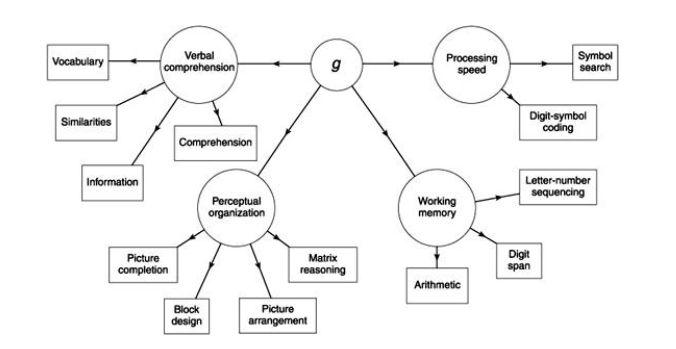
The book pushes the idea that a general factor sits underneath most cognitive abilities. I wanted to fully believe Gardner’s “multiple intelligences”, but the datasets (dated as they are) still point toward some kind of shared problem-solving core.
2. Brain-Related Correlates of Intelligence
A few physical and functional properties correlate with intelligence, but not dramatically:
- Brain size (correlation around 0.3–0.4)
- Electrical activity patterns
- Efficiency of visual processing
- Reaction time
So yes, correlations exist, but they are mild and messy.
3. Genes vs Environment
The old “nature vs nurture” question. This is the part that hits hardest: genes appear to dominate environment in explaining intelligence variability.
5. Fluid vs Crystallized Intelligence
- Fluid: abstract problem solving
- Crystallized: vocabulary and accumulated knowledge
6. Three-Stratum Theory
A hierarchical model of intelligence: narrow skills, broad abilities, and a top-level general factor.
Final Thoughts
I used to be pretty skeptical of the whole g-factor idea and preferred Gardner’s multiple intelligences framework. It just felt more intuitive and more human. But the older datasets in this book, outdated or not, keep pointing back to a general problem-solving factor that you can’t hand-wave away. Annoying, but hard to ignore.
I still think abilities like musicality or openness could count as forms of intelligence, but culturally we’re heavily tilted toward “logical problem-solving” as the only currency that matters. So the real takeaway for me is that everyone has their own blend of a g-factor and what Haier calls an i-factor (pretty sure I picked that up from his interview). The shape of that blend probably matters more than any single score.
The book also nudged me into thinking about deeper links between brain activity, consciousness, and intelligence. I kept circling questions like: • Could information-transfer rate (in the IIT sense) serve as a marker of higher consciousness or more efficient cognition? • How does the rate at which someone absorbs information relate to the stability of Big Five personality traits after adolescence? Does intelligence influence personality drift, or the other way around?
And then there’s the bigger question: what counts as intelligence once you step outside the human brain entirely? Thinking about non-human cognition, or even just biological systems with different architectures, suddenly feels less abstract.
Overall, it’s a surprisingly grounded book. The dataset-driven approach forced me to think about intelligence in a more scientific, less ego-inflated way. Honestly, I liked that. It was refreshing.
Datasets Mentioned
- Study done on Wechsler Adult Intelligence Scale 3rd version WAIS-III test.
- Human Cognitive Abilities: A Survey of Factor-Analytic Studies
- Lothian birth-cohort studies
- Seattle Longitudinal Study
- Berlin Aging Study
- Tony Vernon brain dataset
- The Minnesota Study of Twins Reared Apart
- The Texas Adoption Project: adopted children and their intellectual resemblance to biological and adoptive parents
- The OCTO-Twin Study: Origins of Variance in the Old-old
- Hunter, J. E. & R. F. Hunter (1984). Validity and utility of alternative predictors of job performance. Psychological Bulletin, 96, 72–98.
- The Flynn Effect: A Meta-analysis
P.S.
Reading this made me realize how much the intelligence debate derails because people argue vibes instead of data. The datasets may be old, but they force you to confront what intelligence actually measures and what parts are stable.
P.P.S.
Also, amazing how half the internet still worships the marshmallow experiment, yet the book does not even acknowledge it.